News
HOME > News

Why Are Vacuum Circuit Breakers the Smartest Choice for Modern Power Distribution?

2026-06-30 0 Leave me a message
📄 Article Summary

Vacuum circuit breakers (VCBs) have become the gold standard for medium-voltage protection, offering rapid arc extinction, zero greenhouse gas emissions, and minimal maintenance. This comprehensive guide answers critical questions: How do VCBs work? What are their core components? How do they compare to vacuum contactors? And why are they the preferred technology for utilities, industry, and renewables? With insights from leading manufacturer Comewill, this article equips engineers and buyers with the knowledge to select the right VCB for their application.


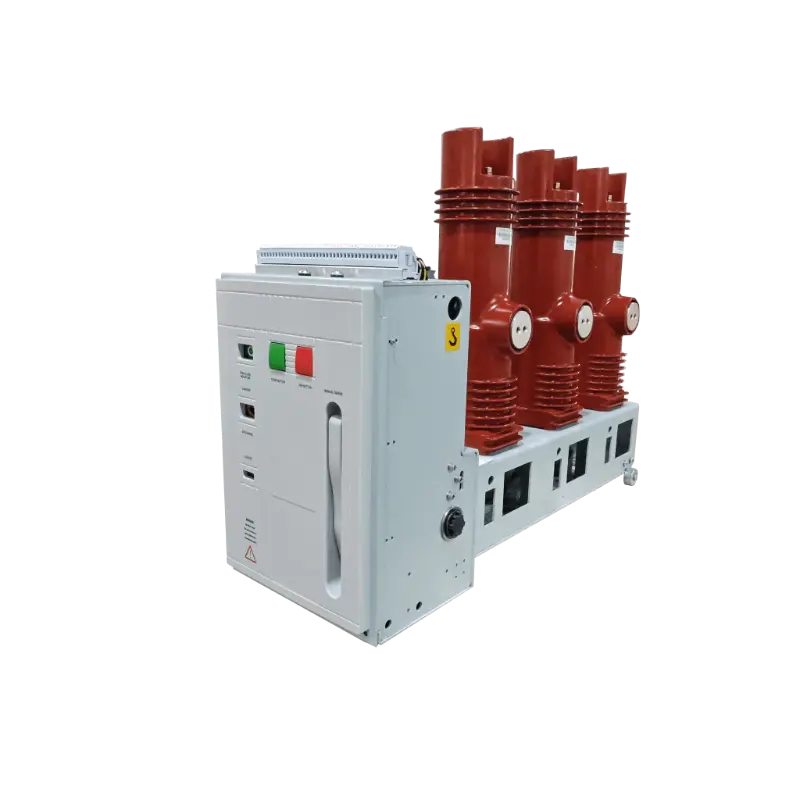
vacuum circuit breaker

1. What Makes Vacuum Circuit Breakers So Effective?

The effectiveness of a vacuum circuit breaker lies in its use of a high vacuum—one of the best electrical insulators known—to extinguish arcs. When the contacts of a VCB separate, the arc that forms is rapidly quenched because there are almost no gas molecules to sustain the plasma. This results in an interruption time of less than half a cycle of the AC waveform, minimizing fault energy and protecting downstream equipment. Additionally, VCBs are environmentally superior to SF₆ breakers, as they emit no greenhouse gases, making them a key technology for sustainable power grids.

2. How Does a Vacuum Circuit Breaker Actually Work?

The operation of a VCB can be broken down into a series of rapid, precise steps:

  1. Contact Separation: When a fault is detected, the operating mechanism forces the movable contact to separate from the fixed contact within the vacuum interrupter.
  2. Arc Ignition: The current causes intense heating at the contact surfaces, vaporizing metal and creating a conductive plasma arc.
  3. Arc Extinction: As the AC current passes through zero, the energy supply to the arc ceases. The metal vapor condenses on the contacts and shielding, and the vacuum gap regains its dielectric strength almost instantaneously.
  4. Dielectric Recovery: The gap can withstand the transient recovery voltage (TRV), preventing arc reignition and ensuring a clean interruption.

This entire process occurs in microseconds, making VCBs exceptionally fast and reliable for both load and fault current switching.

3. What Are the Core Components of a VCB?

A high-quality VCB is an assembly of several critical components:

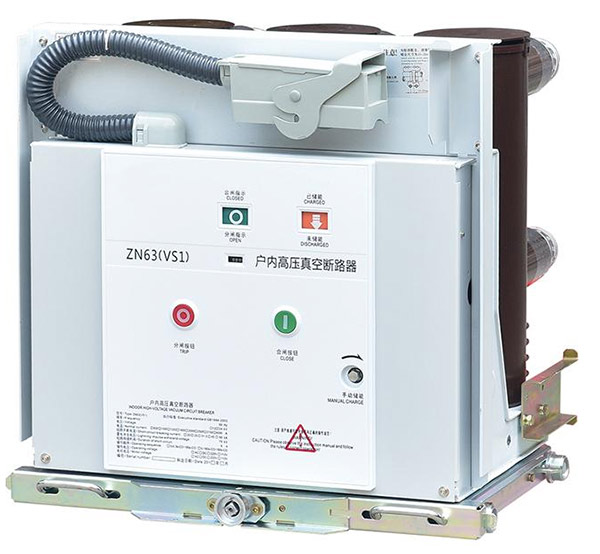
  • Vacuum Interrupter: The sealed chamber housing the contacts, typically made of ceramic or glass, that maintains the vacuum for the device's lifetime.
  • Operating Mechanism: Spring or electromagnetic actuators (e.g., CT19, CT8) that provide fast, precise contact movement with low operating power.
  • Shielding System: Metal vapor shields that condense arc products, protecting the interrupter's insulation.
  • Support Frame & Insulation: Robust bases and epoxy resin insulators that ensure stable installation and electrical clearance.

4. Vacuum Circuit Breaker vs. Vacuum Contactor: What's the Difference?

While both use vacuum interrupters, VCBs and vacuum contactors serve distinct purposes. The table below clarifies the key differences.

Feature Vacuum Circuit Breaker (VCB) Vacuum Contactor
Primary Role Protection against fault currents (short circuits) and infrequent switching. Frequent operational switching of loads like motors and heaters.
Voltage Range 3 kV to 36 kV (up to 40.5 kV for specialized models). Up to 15 kV, typically 200 A to 630 A.
Typical Loads Transformers, generators, capacitors, large motors, distribution feeders. Motors, lighting, heating circuits, and frequently switched equipment.
Switching Frequency Infrequent (protection and isolation). Very frequent (thousands of operations).
Short-Circuit Rating High (20 kA to 50 kA typical). Lower (up to 10 kA).

5. What Are the Key Advantages of VCB Technology?

Vacuum circuit breakers offer a compelling set of benefits that make them the preferred choice for medium-voltage applications:

  • Environmental Safety: Zero SF₆ emissions, supporting sustainability goals.
  • Rapid Interruption: Arc extinguishing within half a cycle, minimizing fault damage.
  • Long Lifespan: Electrical life of up to 5,000 operations at rated current and 30–50 full short-circuit interruptions.
  • Compact Design: Short contact gap (~10 mm for 10 kV) enables space-saving switchgear.
  • Low Maintenance: The sealed interrupter is maintenance-free; only the operating mechanism requires routine checks.
  • High Dielectric Recovery: The vacuum gap recovers strength in microseconds, ensuring reliable performance under transient conditions.

6. Which Type of VCB Is Right for Your Application?

VCBs are available in several configurations to suit different environments and operational needs.

Indoor VCBs

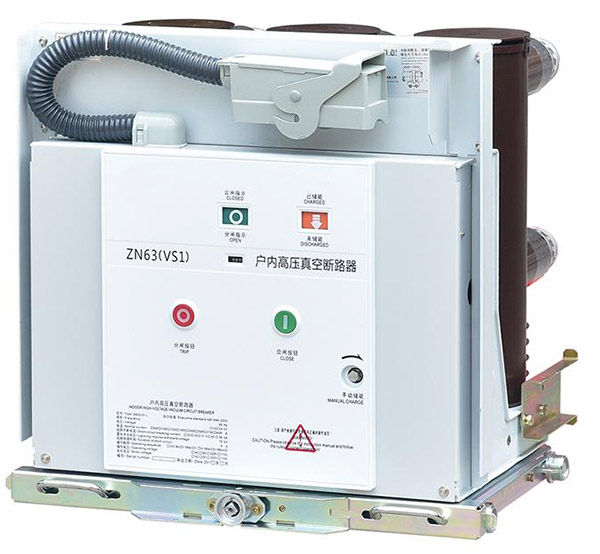
Compact units designed for installation in switchgear panels within factories, commercial buildings, and indoor substations. Examples include the widely used VS1-12 fixed and withdrawable types.

Outdoor VCBs

Weather-resistant models built for substations and transmission networks, capable of withstanding rain, wind, and temperature extremes.

Specialized VCBs

  • Generator VCBs: For high-current generator circuits with demanding fault conditions.
  • Capacitor Switching VCBs: Incorporate controlled switching to reduce prestrikes and inrush currents.
  • High-Frequency VCBs: Designed for tens of thousands of operations, ideal for arc furnace applications.

7. Where Are Vacuum Circuit Breakers Used Most?

VCBs are essential across a broad spectrum of industries and infrastructure:

  • Power Utilities: Substations, distribution networks, and replacement of SF₆ breakers.
  • Industrial Plants: Steel, cement, chemical, and automotive factories.
  • Commercial Buildings: Data centers, airports, shopping malls, and high-rise buildings.
  • Renewable Energy: Solar farms, wind turbines, and battery storage systems.
  • Infrastructure: Railway power, water treatment, and mining operations.

8. Frequently Asked Questions About VCBs

Q1: What is the main difference between a VCB and an SF₆ breaker?

A1: The primary difference is the arc-quenching medium—VCBs use a vacuum, while SF₆ breakers use pressurized gas. VCBs are more environmentally friendly (no greenhouse gas emissions), have faster dielectric recovery, and require less maintenance for medium-voltage applications.

Q2: How long does a vacuum interrupter last?

A2: The vacuum interrupter is sealed for life, typically lasting 10–20 years under normal conditions. The operating mechanism's mechanical life often exceeds 30,000 operations.

Q3: Can a VCB be used for capacitor bank switching?

A3: Yes, but specialized capacitor switching VCBs with controlled switching are recommended to minimize prestrikes, inrush currents, and restrikes, ensuring contact longevity and system stability.

Q4: What maintenance does a VCB require?

A4: Routine maintenance focuses on the operating mechanism, electrical connections, and control circuits—not the vacuum interrupter itself. Typical tasks include visual inspection, contact resistance measurement, and mechanical operation tests every 3–5 years.

Q5: Are VCBs suitable for outdoor use?

A5: Absolutely. Outdoor VCBs are specifically designed with weather-resistant enclosures, high-grade insulators, and anti-corrosion treatments to withstand harsh environmental conditions.

9. Conclusion: Why Choose Comewill for Your VCB Needs?

Vacuum circuit breakers are the clear winner for modern medium-voltage power distribution, combining superior performance, environmental responsibility, and long-term reliability. As the industry continues to phase out SF₆, the demand for high-quality VCBs is set to rise. Selecting a trusted manufacturer is crucial to ensuring that your equipment delivers consistent performance and safety.

Comewill, a leading China-based factory and supplier, offers a comprehensive range of indoor, outdoor, and specialized VCBs. Our products are engineered with precision, rigorously tested, and available for both stock orders and custom wholesale projects. By choosing Comewill, you benefit from direct factory pricing, technical expertise, and responsive customer support.

Partner with Comewill for Reliable Power Protection

Whether you need standard indoor VCBs, rugged outdoor units, or specialized designs, Comewill has the solution. Our team is ready to assist with technical specifications, pricing, and delivery.

📧 Contact us today to discuss your requirements or request a quotation. We look forward to supporting your next project.

Related News
Leave me a message
X
We use cookies to offer you a better browsing experience, analyze site traffic and personalize content. By using this site, you agree to our use of cookies.Privacy Policy
RejectAccept