News
HOME > News

Is Your Control Panel at Risk?

2025-12-02 0 Leave me a message

Electrical cabinets are the silent workhorses of modern industry, protecting sensitive controls, PLCs, and switchgear. However, the biggest threats to these components are invisible: humidity and cold. In this guide, we explore the essentials of the Heater For Cabinet, answering the most impactful questions engineers face. We will dive deep into one specific question—"How does a cabinet heater prevent costly condensation damage?"—and provide a complete overview of technology, selection criteria, and best practices. Brought to you by Comewill, this article aims to help you safeguard your investments with precision thermal management.

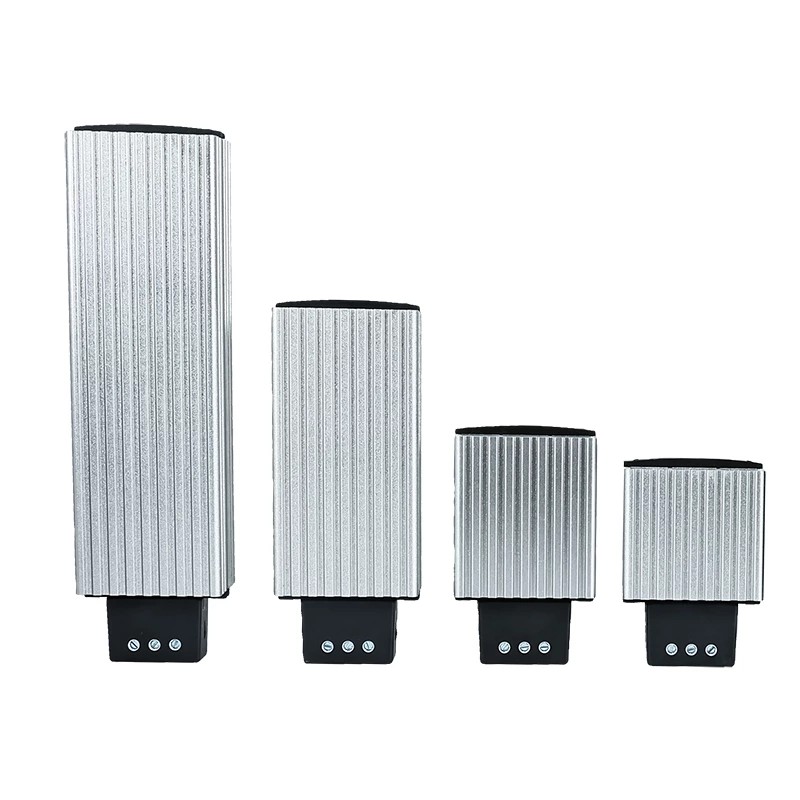
HG140 PTC Semiconductor Heater

Table of Contents

1. Key Takeaways

2. Defining the 7 Most Influential Questions About Heater For Cabinet

3. Deep Dive: How Does a Heater For Cabinet Prevent Costly Condensation Damage?


  • The Science of Condensation in Enclosures
  • Heating vs. Traditional Dehumidification
  • Real-World Impact: Data on Failure Prevention


4. Installation and Safety Protocols

5. Frequently Asked Questions (FAQ)

6. Conclusion and Call to Action


1. Key Takeaways

Before diving into the details, here are the essential points to remember about cabinet heating:


Primary Function: A Heater For Cabinet is designed to prevent condensation and maintain a minimum temperature, not to "heat" the space like a room heater .


The Real Enemy: Relative humidity, not just cold temperatures, causes component corrosion and short circuits. A slight temperature increase dramatically lowers relative humidity .


Technology Matters: PTC (Positive Temperature Coefficient) elements are the industry standard for safety and efficiency, as they self-regulate and prevent overheating .


Sizing is Critical: Selecting the correct wattage depends on the cabinet's surface area, desired temperature rise, and insulation. Too little power fails to prevent condensation; too much can waste energy.


2. Defining the 7 Most Influential Questions About Heater For Cabinet

When sourcing or specifying thermal management solutions, professionals ask specific, high-impact questions. Here are the most influential "Heater For Cabinet" keyword variations, framed as questions:

1) How does a Heater For Cabinet prevent costly condensation damage? (The technical mechanism behind dehumidification)

2) What size Heater For Cabinet do I need for my electrical enclosure? (Sizing and selection criteria)

3) PTC vs. Resistive Heater For Cabinet: Which is safer? (Technology comparison for reliability)

4) Can a Heater For Cabinet be used in hazardous outdoor locations? (Environmental adaptability and IP ratings)

5) How to install a DIN rail Heater For Cabinet correctly? (Installation best practices)

6) What is the difference between a fan heater and a convection heater for cabinets? (Performance characteristics)

7) Why is my cabinet sweating even with a Heater For Cabinet installed? (Troubleshooting common failures)

3. Deep Dive: How Does a Heater For Cabinet Prevent Costly Condensation Damage?

This is the most critical question for any plant manager or control panel builder. To answer it, we must first understand the enemy: dew point.

  • The Science of Condensation in Enclosures

Air can hold a specific amount of water vapor. The amount it can hold is directly related to temperature—warm air holds more moisture, cold air holds less. Relative Humidity (RH) is a measure of how much water the air is holding compared to its maximum capacity at that temperature.

When the air inside a cabinet cools down (e.g., at night when equipment is off or the enclosure surface is exposed to cold), its capacity to hold moisture decreases. If the temperature drops below the dew point, the excess water vapor condenses into liquid water on surfaces like circuit boards and busbars .

This water leads to:

Short Circuits: Water creates conductive paths where none should exist.

Corrosion: Metal components oxidize, increasing resistance and generating heat.

Creepage Failure: Moisture allows current to "creep" across insulating surfaces.

  • Heating vs. Traditional Dehumidification

There are two primary ways to fight this, but Comewill focuses on the most reliable method for most industrial applications: heating.

Feature Heater For Cabinet (Thermal Management) Condensation Dehumidifier (Refrigeration)
Principle Raises air temperature to lower relative humidity. Cools a surface to physically remove water.
Effect on Air Reduces RH but maintains absolute moisture. Removes absolute moisture from the air.
Installation Simple DIN rail mounting, low profile. Often larger, requires drainage tubing.
Best Use Case Preventing future condensation and maintaining min. temperature. Removing existing high moisture levels.
Re-condensation If heater fails and temp drops, condensation returns instantly. Once water is removed, it stays gone.

The Heater For Cabinet works by creating a "micro-climate." By raising the internal temperature just a few degrees above the ambient external temperature, the internal air maintains a much lower relative humidity. This ensures that even if the cabinet wall is cold on the outside, the air touching it on the inside is too warm to reach its dew point.


  • Real-World Impact: Data on Failure Prevention


While a heater doesn't remove water, it effectively stops the formation of water. Industry data shows that maintaining a consistent temperature differential of 5°C (9°F) above the ambient dew point virtually eliminates the risk of condensation. Products like those from leading manufacturers utilize PTC resistors which provide a self-limiting heat output, ensuring the temperature stays within a safe operating window without wasting energy or risking component damage


Installation and Safety Protocols

To ensure your Heater For Cabinet performs as expected, follow these critical guidelines derived from industry best practices:

Vertical Air Flow: Mount the heater vertically (air outlet facing up) to allow natural convection or to support the fan's airflow direction .

Maintain Clearance: Always observe a safety clearance of 50 to 100 mm between the heater and adjacent components or wiring. This prevents plastic components from melting or wires from overheating .

Parallel Connection: If using multiple PTC heating elements together, they must be connected in parallel, not in series. Series connection can lead to unstable power and temperature distribution.

Do Not Voltage-Control: The surface temperature of a PTC heater is self-regulated by its internal resistance. Attempting to control the temperature by lowering the voltage (e.g., using a dimmer) will cause the PTC to oscillate or fail to operate correctly.

Safety First: Ensure the device has the correct approvals (CE, cURus, etc.) and matches your supply voltage (e.g., 230V AC, 115V AC) .

Frequently Asked Questions (FAQ)

Q: Will a Heater For Cabinet reduce the absolute moisture in my box?

A: No. Unlike a refrigerant dehumidifier, a standard heater does not remove water from the air. It lowers the relative humidity by warming the air, which increases its capacity to hold moisture, thereby preventing condensation . Think of it as a preventative measure, not a curative one for already soaking-wet components.

Q: What happens if the fan fails on a fan heater?

A: High-quality fan heaters with PTC elements, such as those referenced by Comewill, are designed with safety in mind. The PTC element has a built-in temperature limit. If the fan fails and heat builds up, the PTC's resistance increases, automatically reducing the power output to prevent overheating and fire hazards. Some models also include a secondary thermal fuse .

Q: Can I use a regular space heater in my electrical cabinet?

A: Absolutely not. Standard space heaters are not designed for the confined space of an electrical cabinet. They lack the necessary safety certifications (like double insulation - Protection Class II), are too large, and may not have the correct IP rating (IP20 or higher is standard) to prevent foreign object entry. Always use a purpose-built Heater For Cabinet .

Q: My cabinet is outdoors and gets very cold. Should I run the heater 24/7?

A: While the heater is robust, continuous operation is wasteful. It is highly recommended to use a thermostat or hygrostat. This allows the heater to operate only when the temperature drops below a set point (e.g., to protect against frost) or when humidity reaches a dangerous level . This extends the life of the device and saves energy.

Q: What is the typical lifespan of a PTC cabinet heater?

A: PTC elements themselves are semiconductor devices with an extremely long theoretical lifespan because there are no contacts to wear out or coils to burn through. The lifespan of the complete unit is usually determined by the fan's ball bearings (if a fan is present). High-quality units use durable ball bearings rated for tens of thousands of hours .

Conclusion and Call to Action

Protecting your electrical and electronic infrastructure from the silent threats of humidity and cold is not optional—it is a necessity for operational reliability. A high-performance Heater For Cabinet is the most effective, efficient, and reliable solution to prevent condensation, maintain component integrity, and ensure your systems are ready to perform, regardless of environmental conditions.

At Comewill, we understand the complexities of thermal management. As a leading manufacturer and supplier in China, our factory is equipped to meet global standards, offering everything from customized PTC heaters to high-volume spot supplies. Our heaters are designed with the features that matter: intelligent control options, easy DIN rail installation, and corrosion-resistant materials for long-lasting reliability.

Don't let condensation shut you down.

Ensure the longevity of your equipment with Comewill's precision-engineered solutions.

Contact us today to discuss your specific requirements. Whether you need technical specifications, a custom design, or a bulk order quote, our team is ready to provide you with efficient, reliable, and high-performance thermal solutions.


Related News
Leave me a message
X
We use cookies to offer you a better browsing experience, analyze site traffic and personalize content. By using this site, you agree to our use of cookies. Privacy Policy
Reject Accept